For decades, loyalty programs have been one of the travel industry’s most powerful tools for building customer retention. Airlines rewarded frequent flyers with miles, hotels offered points for repeat stays, and travel brands relied on loyalty programs to keep customers coming back.
But loyalty is no longer just about rewarding repeat purchases.
A much bigger shift is underway.
As travel points become easier to earn, transfer, redeem, and spend across multiple ecosystems, they are beginning to behave less like rewards and more like a form of digital currency.
For airlines, hotels, OTAs, and travel technology leaders, this evolution could fundamentally change how loyalty is built, measured, and monetized.
The future of loyalty may not be about how many points travelers earn. It may be about how much value those points hold.
Loyalty Is No Longer Just About Rewards
Traditional loyalty programs were built around a simple idea: reward customers for staying loyal to a brand.
The model worked well when travelers primarily engaged with a limited number of airlines, hotel chains, or travel providers. Customers accumulated points over time and redeemed them for future benefits.
Today’s traveler behaves differently.
Most consumers belong to multiple loyalty programs simultaneously. They compare rewards, switch brands more frequently, and expect flexibility in how they use the value they earn.
At the same time, consumers have become accustomed to seamless digital experiences. They can transfer money instantly, make payments with a tap, and access financial services directly from their smartphones.
Against this backdrop, waiting months or years to redeem rewards can feel outdated.
The Rise of Loyalty Ecosystems
To stay relevant, travel brands have expanded loyalty programs beyond their traditional boundaries.
Airline miles are now earned through credit cards, retail purchases, dining programs, ride-sharing services, and entertainment subscriptions. Hotel rewards can often be redeemed for experiences, merchandise, or partner services.
This shift has transformed loyalty programs into interconnected ecosystems. The more places travelers can earn and spend points, the more useful those points become.
And utility drives engagement.
Consider how modern consumers interact with rewards today. A traveler might earn points through a credit card purchase, redeem them toward a hotel stay, and then use a partner offer to pay for an experience at their destination.
The value is no longer tied to a single brand. It exists across an ecosystem.
That’s where loyalty begins to resemble a currency.
When Points Start Behaving Like Money
Every currency serves one fundamental purpose: it enables exchange.
Traditionally, loyalty points had limited exchange value. They could only be redeemed within a specific program and often came with restrictions.
That is changing rapidly.
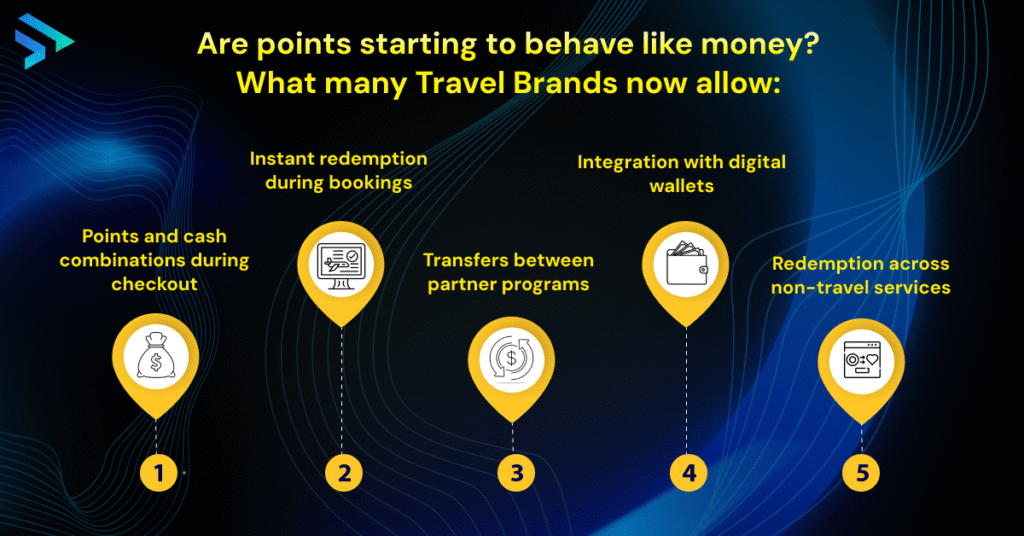
Many travel brands now allow:
Points and cash combinations during checkout
Instant redemption during bookings
Transfers between partner programs
Integration with digital wallets
Redemption across non-travel services
As these capabilities expand, customer behavior changes. Travelers begin to evaluate points based on their purchasing power rather than simply their quantity.
The Technology Powering the Shift
The transition from rewards to currency requires more than a strong loyalty strategy.
It requires modern technology.
Legacy loyalty systems were built to track balances and process redemptions. Future loyalty ecosystems will need capabilities that resemble digital commerce platforms.
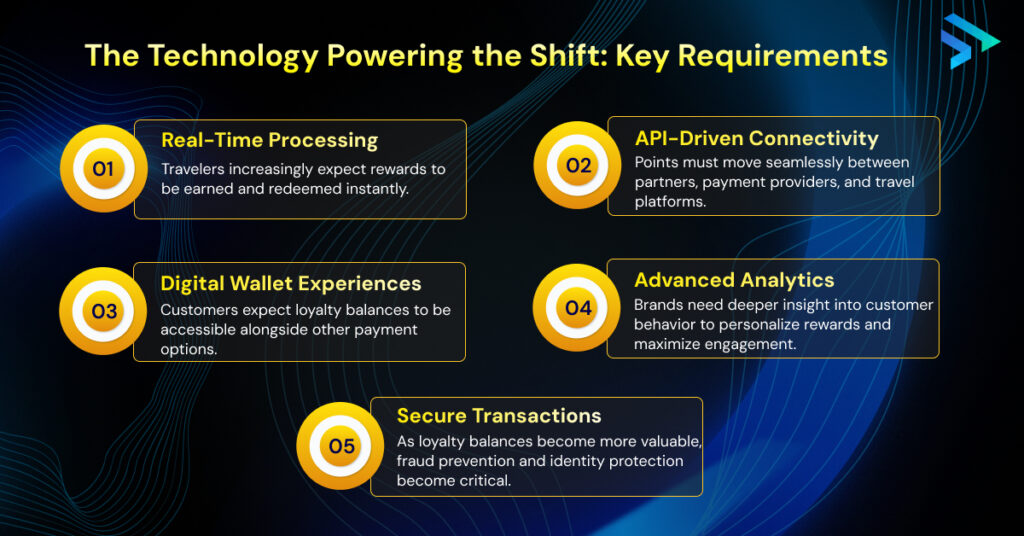
Key requirements include:
The Challenges Ahead
While the opportunity is significant, loyalty currencies introduce new complexities.
Security Risks
The more valuable loyalty points become, the more attractive they become to fraudsters.
Account takeovers, unauthorized transfers, and reward theft are likely to increase if security measures fail to evolve.
Regulatory Considerations
As loyalty programs become increasingly transferable and ecosystem-driven, regulators may begin paying closer attention to how these systems operate.
Questions around taxation, compliance, consumer rights, and transparency may become more relevant in the years ahead.
Maintaining Trust
Every currency depends on confidence.
If customers struggle to understand point values or perceive rewards as unpredictable, trust can quickly erode.
Brands must ensure loyalty remains simple, transparent, and valuable.
The Future of Travel Loyalty
The next generation of travel loyalty programs will look very different from the programs that exist today. Instead of functioning solely as retention tools, they will become integrated value networks connecting travelers, brands, partners, and experiences.
The winners will not necessarily be the companies offering the most points. They will be the companies creating the most useful points.